Guide to Understanding Hands-Free Driving Laws
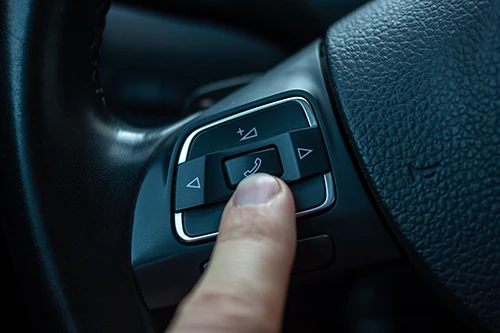
Hands-free driving technology has made our roads safer, but understanding the rules around its use remains crucial. Motorscan has been delving into the topic to bring you what’s legal and what’s not—whether you’re using Bluetooth, voice control, phone mounts, or in-car systems. You’ll also learn about the penalties, police detection methods, and best practices to ensure you’re always compliant and safe!
Hands-free driving technology has truly changed the game, making driving more convenient and safer than ever. But with these advancements come new rules, making it essential for every driver to understand the ins and outs of UK hands-free driving laws to stay safe and compliant on the road. Whether you’re considering using voice commands or relying on a trusted phone mount, knowing what’s allowed and what’s not is essential. In our latest article, we’ll break down everything you need to know to stay safe and compliant while enjoying the benefits of hands-free driving!
Understanding Hands-Free Driving Laws
The term ‘hands-free’ refers to operating a mobile phone, satnav or other device without physically holding it, typically through voice commands or steering wheel controls. Legally, there’s a key distinction between handheld and hands-free devices. Under the Road Traffic Act 1988, it’s illegal to hold a device in your hand while driving (handheld devices). This includes making calls, texting, adjusting routes or using apps, even if you’re stationary and behind the wheel (unless you’re parked with the engine off), for example, sitting in traffic.
Devices that don’t require physical interaction (hands-free devices) are legal—for example, a mobile phone that remains in a fixed position and can be operated using voice commands.
What Hands-Free Driving Actions are Legal and What are Not?
Using hands-free devices through Bluetooth, voice control, or dashboard mounts is legal if they don’t distract you from driving. Always remember, the key is to stay focused on the road! Here’s what you need to know:
- Legal use: Bluetooth, voice control and dashboard mounts for calls or navigation.
- Illegal use: Holding your phone or other device while driving, even with hands-free setups.
- Stationary use: It is illegal to use your phone while stationary in traffic unless the engine is off and the car is parked.
- Emergency exceptions: You can use your phone for urgent situations (e.g., an accident and you can’t pull over).
- In-car systems: Music, navigation, or communication via in-car systems are legal if they don’t distract you.
Is It Legal to Use a Mobile Phone in a Mount?
Using a phone in a fixed dashboard mount is legal if it’s securely placed and doesn’t obstruct your view of the road or distract you. While it’s legal to interact with a mounted phone through voice commands, touching it to adjust it, make calls, or change navigation apps could be considered a distraction and is not advisable. The key is to avoid physical interaction with the phone while driving and always set it up, including navigation apps, before you start to drive so you can stay focused and drive safely.
What are the Fines & Penalties for using a Mobile Phone whilst Driving?
Using a phone illegally while driving can result in significant penalties, which have increased in recent years, highlighting the seriousness of the offence and the government’s commitment to road safety. Drivers caught holding and using their phones face six penalty points and a fine of £200 on their license. For newly qualified drivers, the penalties are even harsher. Accumulating six or more penalty points within the first two years of passing their test can result in their license being revoked.
In more severe cases, such as when phone use leads to dangerous driving or accidents, drivers can be prosecuted in court, potentially facing higher fines, disqualification from driving, or even prison sentences. And remember, even if your phone is in a dashboard mount, interacting with it could still be considered unsafe or even illegal if it causes a distraction or takes your focus off the road, especially if it leads to an accident.
How do the Police Detect and Enforce Illegal Mobile Phone Use?
It may seem impossible to comprehend how mobile phone use while driving is detected—after all, how can the police see what you’re doing inside your car? However, advanced enforcement and detection methods are making it easier than ever for authorities to catch offenders. While police officers can still spot phone use directly through roadside patrols, new technologies, like roadside cameras and AI detection, are now being used to identify when a driver is using their phone automatically. These systems can pick up on the telltale signs of phone use, even when the driver isn’t immediately aware. Case studies show these methods are becoming increasingly successful, particularly in areas with high traffic volumes.
Additionally, many drivers still hold misconceptions, such as believing that you can only be penalised for illegal phone use if you’re caught by a police officer directly witnessing it. In reality, AI-enabled cameras and other technology can detect illegal phone usage without needing the physical presence of an officer, making enforcement more effective and widespread than ever, and with AI technologies becoming more prevalent and more accurate, it will only get easier for authorities to track violations in real time.
So, what are the Hands-Free Best Practices?
Using hands-free alternatives while driving is essential to staying compliant and safe. Car-integrated systems like Apple CarPlay and Android Auto allow drivers to access navigation, music, and messages using voice commands, ensuring no need for physical interaction at all. And, to minimise the temptation to touch your phone while driving, consider placing the mount where you can’t touch it but still benefit from navigation apps if you’re using them. Additionally, to further reduce distractions, set your phone to “Do Not Disturb” mode while driving and plan your routes before setting off. Always prioritise safety by keeping interactions with your car system to a minimum and avoiding any physical contact with your phone. This allows you to stay focused on the road and stay safe!
Read more...

What is an car insurance write-off? Guide to CAT A, B, C, D, N
The concept of "insurance write-offs" can baffle the most seasoned drivers, and grasping the implications of Categories A, B, S, and N is essential. Here Motorscan guides you through vehicle write-offs, decoding category assignments and explaining the pivotal role of the DVLA. Dive into crucial insights on legal requirements, safety checks, and verifying a vehicle's write-off category to navigate car ownership confidently!

A guide to the MOT Test
If you own and use a vehicle on the road it is your responsibility to ensure this vehicle is maintained and kept in a condition that deems it roadworthy at all times.